Articles by "Great Personality"
Showing posts with label Great Personality. Show all posts
Famous People From Pakistan

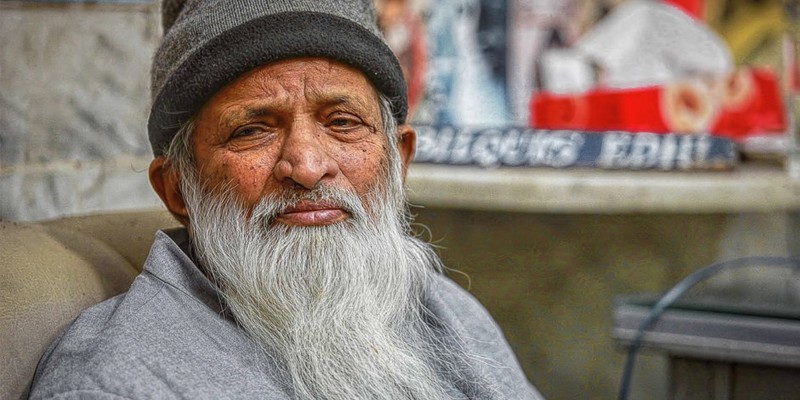
Abdul Sattar Edhi


The spirit of the Edhi foundation was born when Abdul Sattar Edhi was a child. At the tender age of eleven, Edhi's mother became paralyzed and mentally ill. Young Abdul Sattar Edhi devoted himself to her care and took on the role of feeding, bathing, and clothing her daily. Her deteriorating mental and physical condition left a lasting impact on Edhi's mind. As a result, he dropped out of High School and strictly focused on his mother's health.`Edhi's mother died when he was nineteen. His mother's death made him reflect on other fellow Pakistanis who were suffering from similar illnesses. After his family moved to Pakistan in 1947, Edhi established a free dispensary with the help of other community members. His vision for establishing and improving the healthcare sector in Pakistan enabled him to establish a personal welfare trust for the people called "Edhi Trust". With the help of public funding, Edhi's trust was able to collect Rs.200,000. [29]. He expanded the trust to other medical fields and through hard work and diligence, he went on to establish a maternity home and an emergency ambulance service. Edhi made it a habit to involve himself in every aspect of his foundation[30]. His foundation raised money for most noble causes. The Edhi foundation had allotted a quota for each humanitarian cause, whether it was burying abandoned corpses or aiding in disaster relief.
He told NPR in 2009 that "I saw people lying on the pavement ... The flu had spread in Karachi, and there was no one to treat them. So I set up benches and got medical students to volunteer. I was penniless and begged for donations on the street. And people gave. I bought this 8-by-8 room to start my work."
At the age of 20 Edhi joined a Memon charity as a volunteer. However, once he understood that it only attended to Memon people he confronted his superiors and left to form an independent medical center. He feared the Memons would have him killed because of the stand he made, so he left the country is search of safety and knowledge. Edhi travelled to Europe and made his way to London via Rome by asking for donations and begging. His time in London allowed him to examine the social welfare programs set up in the United Kingdom and on which he based the rest of his charitable works. Edhi resolved to dedicate his life to aiding the poor, and over the next sixty years, he single-handedly changed the face of welfare in Pakistan.


Abdul Sattar Edhi was born in 1928 in a small village of Bantva near Joona Garh, Gujrat (India). The seeds of compassion for the suffering humanity were sown in his soul by his mother’s infirmity. When Edhi was at the tender age of eleven, his mother became paralysed and later got mentally ill. Young Abdul Sattar devoted himself for looking after all her needs; cleaning, bathing, changing clothes and feeding. This proved to be a loosing battle against the disease, and her helplessness increased over the years. Her persistent woeful condition left a lasting impression on young Edhi. The course of his life took a different turn from other persons of his age. His studies were also seriously affected and he could not complete his high school level. For him the world of suffering became his tutor and source of wisdom.

Edhi’s mother died when he was 19. His personal experience made him think of thousands and millions, suffering like his mother, around with nobody to look after them. He thought that he had a call to help these people. He had a vision of chains of welfare centres and hospitals that could be opened to alleviate the pain of those suffering from illness and neglect. He also thought of the in-human treatment meted out to the mentally ill, the insane and the disabled persons.
Even at this early age, he felt personally responsible for taking on the challenge of developing a system of services to reduce human miseries. The task was huge he had no resources. But it was some thing that he had to do even if he had to walk to the streets if he had to beg for this purpose.
Edhi and his family migrated to Pakistan in 1947. In order to earn his living, Abdul Sattar Edhi initially started as a peddler, later became a commission agent selling cloth in the wholesale market in Karachi.
After a couple of years, he left this occupation and with the support of some members of his community decided to establish a free dispensary. He became involved in this charity work. However, soon his personal vision of a growing and developing system of multifarious services made him decide to establish a welfare trust of his own and named it as “Edhi Trust”.
An appeal was made to the public for funds. The response was good, and Rs.200,000/- were raised. The range and scope of work of Edhi Trust expanded with remarkable speed under the driving spirit of the man behind it. A maternity home was established and emergency ambulance service was started in the sprawling metropolis of Karachi with a population of over 10 million.

More donations were received as people’s confidence in the activities of the Trust grew. With the passage of time, masses gave him the title of the” Angel of Mercy.”
Abdul Sattar Edhi was married in 1965 to Bilquis, a nurse who worked at the Edhi dispensary. The couple have four children, two daughters and two sons. Bilquis runs the free maternity home at the headquarter in Karachi and organises the adoption of illegitimate and abandoned babies. The husband-wife team has come to share the common vision of single minded devotion to the cause of alleviation of human sufferings and a sense of personal responsibility to respond to each call for help, regardless of race, creed or status.
Edhi involves himself in every activity at Edhi Foundation from raising funds to bathing corpses. Round the clock he keeps with him an ambulance which he drives himself and makes rounds of the city regularly. On finding a destitute or an injured person any where on the way, he escorts him to the Relief Centre where immediate attention is given to the needy person. Inspite of his busy work schedule with the Foundation, Edhi finds enough time to spare with the residents of the orphanages called “Edhi Homes”. He is very found of playing and laughing with the children. A short strongly built man in his early seventies with a flowing beard and a ready smile, Edhi is popularly called “Nana” (Grandfather) by the residents of “Edhi Homes”.
Despite his enormous fame and the vast sums of money that passes through his hands, Edhi adheres to a very simple and modest life style. He and his family live in a two room apartment adjacent to the premises of Foundation’s headquarter. Neither Edhi nor Bilquis receives any salary. They live on the income from government securities that Edhi bought many years ago to take care of their personal needs for the rest of their lives, thereby freeing them to devote single mindedly to their missionary work.
He shuns publicity for the fear of becoming haughty. As the credibility and fame grew and the name of Edhi became a house-hold word, people started approaching him for becoming chief guest on special occasions.
In an interview given to a journalist in Lahore in 1991, Edhi said,”I want to request the people not to invite me to social gatherings and inaugural ceremonies. This only wastes my time which is wholly devoted to the well being of our people.” 
Although Edhi has a traditional Islamic background, he has an open and progressive mind on a number of sensitive social issues. He strongly supports the notion of working women. Of the 2,000 paid workers of the Edhi Foundation around 500 are women. They work in various capacities in-charges of Edhi centres, heads of maternity homes and dispensaries and office workers. More-over, several women volunteers help Edhi Foundation in fund raising. Edhi encourages women to do all sorts of work without differentiation.
Great Personalities

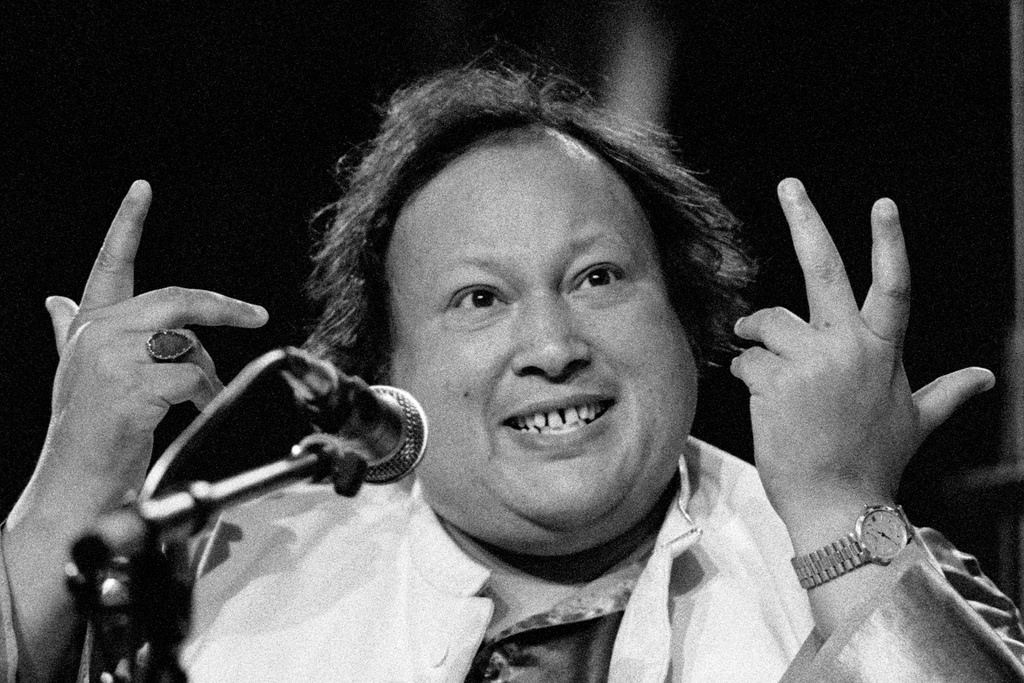
  • Ustad Nusrat Fateh Ali Khan Sb  


  • Nusrat Fateh Ali Khan was born on 13 October 1948 in Hazara, Faisalabad, Punjab, Pakistan. His Punjabi Muslim family had migrated to Pakistan from their native city of Jalandhar in East Punjab, British India, after the partition of India in 1947.
  • His father Fateh Ali Khan was a musicologist, vocalist, instrumentalist, and qawwal. Nusrat had four elder sisters and one younger brother. He hailed from a family with a rich legacy of qawwali music. Two of his uncles, Ustad Mubarik Ali Khan and Ustad Salamat Ali Khan, were also famous qawwals.
  • Initially his father wanted Nusrat to become a doctor or an engineer as he felt that qawwals had low social status. Nonetheless, Nusrat received musical training in tabla and vocals.
  • His father died in 1964 when Nusrat was 16 years old. Ten days after his death, Nusrat had a dream in which his father appeared and instructed him to sing. The boy gave his first public performance at his father's funeral ceremony 40 days later.
Nusrat Fateh Ali Khan was a Pakistani musician and singer, counted amongst the greatest voices ever recorded. He was primarily a singer of qawwali, the devotional music of the Sufis. As a singer he was blessed with an extraordinary voice and could perform at a high level of intensity for several hours. Born into a family of accomplished singers and musicians, he developed an early interest in the art form. However, his father wanted him to become a doctor or engineer as he felt that practitioners of qawwali had low social status. But fate had other plans and Nusrat too went on to become a musician cum singer. He gave his first public performance at the age of 16 and soon became the head of the family qawwali party. Within a few years he established himself throughout Pakistan as one of the greatest qawwals of his generation. As he matured as a performer he developed his own unique style of qawwali, experimenting with the tempo and voice ranges. It did not take long for his fame to spread worldwide and he became a much recognized and respected figure in countries across the world including India, Japan, and the U.S. Credited with introducing qawwali music to international audiences, he is popularly referred to as "Shahenshah-e-Qawwali", meaning "The King of Kings of Qawwali”.Nusrat Fateh Ali Khan joined his uncles in giving performances and blossomed into a talented singer of qawwali. Initially he drew on his uncles’ musical style, and as he matured as a performer, he added his own creative touches to his music and developed his unique, distinguishing style of singing qawwali.His uncle Mubarak Ali Khan died in 1971, and Nusrat Khan became the official leader of the family Qawwali party which now became known as “Nusrat Fateh Ali Khan, Mujahid Mubarak Ali Khan & Party”.As the leader of the family party, he gave his first performance at a studio recording broadcast known as ‘Jashn-e-Baharan’ which was a part of an annual music festival organized by Radio Pakistan. There he sang in many languages including Urdu, Punjabi, Persian and Hindi.Soon he gained much fame and established himself throughput Pakistan as one of the best known contemporary qawwals of his era. Blessed with a powerful voice and high stamina, he could perform at a high level of intensity for several hours. He was accompanied by tabla, harmoniums, and backing vocals in concerts.It was not long before his fame spread beyond Pakistan and Khan performed at the World of Music, Arts and Dance (WOMAD) festival in London in 1985. He then began touring and performing widely, travelling to Paris in 1985 and 1988, and visiting Japan in 1987 at the invitation of the Japan Foundation. In 1989, he performed at Brooklyn Academy of Music, New York.His popularity skyrocketed in the 1990s and he served as a Visiting Artist in the Ethnomusicology department at the University of Washington, Seattle, in 1992–93.Over the course of his career he also released several albums and worked on the soundtracks of numerous films on an international level. He worked with Canadian musician Michael Brook on the albums ‘Mustt Mustt’ (1990) and ‘Night Song’ (1996). He had also worked with Peter Gabriel on the soundtrack ‘The Last Temptation of Christ’ in 1988 which gave him the chance to blend qawwalis with Western music.


Nusrat Fateh Ali Khan married his first cousin, Naheed, the daughter of his uncle, Salamat Ali Khan in 1979. They had one daughter, Nida.

He fell ill with kidney and liver failure in 1997 while in London. He suffered a fatal heart attack and died on 16 August 1997. He was 48 years old. Khan's musical legacy is now carried forward by his nephew, Rahat Fateh Ali Khan.

Thanks and Regards,
PickClicks Team
LIAQAT ALI KHAN
The First Prime Minister Of PAKISTAN

Famous > Prime Minister of Pakistan
Birthday>  October 1, 1895
Nationality > Pakistani


It was sordid beginning for the new State. Its founding father Quaid-i-Azam Mohammad Ali Jinnah having won the battle for Pakistan, lost his own battle for life. His successor -his most trusted lieutenant- Nawabzada Liaquat Ali Khan, appointed by him as first prime minister who having served him for more than twelve years as general secretary of his party, had become an apple of Jinnah Sahib’s eyes -an aristocrat with enormous land holdings- Quaid called him a converted proletariat.

Liaquat’s budget as the finance member of the interim government of India before partition had sought greatest good of the largest number especially the poor in India who saw in him as their messiah in a socio-economic order that was dominated by caste-ridden Hindu Banya hierarchy. Jinnah Sahib found in him an able successor who had the honesty, determination and commitment to be rightly called as builder of Pakistan.

  • Liaquat Ali Khan was born on 1 October 1895 in Karnal, Eastern Punjab of British India into a wealthy family of landlords. His father, Nawab Rustam Ali Khan, was much respected by the British Government and his mother Mahmoodah Begum was a religious lady.
  • His family wanted the young Liaquat to be educated according to the British educational system and arranged for him to study law and political science at the famous Muhammadan Anglo Oriental College (now Aligarh Muslim University). He graduated with a BSc in Political science and LLB in 1918.
  • He received scholarships and grants from the British Government which enabled him to attend the Oxford University's Exeter College in England for his higher education. In 1921, Khan was awarded the Master of Law in Law and Justice. He was called to the Bar in 1922.
Liaquat Ali Khan was martyred on October 16, 1951, in Liaquat Bagh (former Company Bagh) in the Pindi district that was to later see tragic ends to two other popular prime ministers—Shaheed Zulfikar Ali Bhutto and martyred Prime Minister Benazir Bhutto.
Despite all his achievements, Khan earned several detractors during his political career. His tenure as the prime minister was marred by the Indo-Pakistan War in 1947 and the Balochistan conflict. His ability as Pakistan’s leader was questioned by the communists and socialists active in the country. Problems also cropped up with Pakistan Armed Forces.
The late 1940s marked a highly tumultuous period in the newly formed nation’s history. Even though Khan was determined that Pakistan be a part of the Non-Aligned Movement, he had to side with the United States in their intense competition with the Soviet Union as the U.S. had promised aid to help the newly independent Pakistan.
It is a strange coincidence that the murder of all three was election centric. Liaquat was to announce the date for first ever general elections in Pakistan. SZAB became a victim of polls related conspiracy hatched by General Ziaul Haq to remove him. Third prime minister from Sindh, Mohatarma Benazir Bhutto too was martyred outside Liaquat Bagh where she addressed her last election rally on returning home after having fought successfully for the return of electoral democracy. She was eliminated by design by the last military dictator who feared her most.
  • Upon becoming the prime minister, Khan implemented initiatives to develop educational infrastructure, science and technology in the country. He appointed Salimuzzaman Siddiqui as his first government science adviser and asked Ziauddin Ahmed to draft the educational policy for establishing a strong educational system in Pakistan. During his tenure, the establishment of the Sindh University was also authorized.
  • As the leader of a newly created nation, Khan wanted to develop friendly relations with powerful countries like the U.S. He visited the U.S. and asked for civilian foreign aid for economic and moral support to build Pakistan to which the U.S. agreed. Pakistan received U.S. aid for several years before the relations between the two nations soured.

Muhammad Ali Jinnah


Jinnah's father Jinnahbhai Poonja (born 1850) was the youngest of three sons. He married a girl Mithibai with the consent of his parents and moved to the growing port of Karachi. There, the young couple rented an apartment on the second floor of a three-storey house, Wazir Mansion. The Wazir Mansion has since been rebuilt and made into a national monument and museum owing to the fact that the founder of the nation, and one of the greatest leaders of all times was born within its walls.
On December 25, 1876, Mithibai gave birth to a son, the first of seven children. The fragile infant who appeared so weak that it weighed a few pounds less than normal. But Mithibai was unusually fond of her little boy, insisting he would grow up to be an achiever.
Officially named Mahomedali Jinnahbhai, his father enrolled him in school when he was six—the Sindh Madrasatul-Islam; Jinnah was indifferent to his studies and loathed arithmetic, preferring to play outdoors with his friends. His father was especially keen towards his studying arithmetic as it was vital in his business. By the early 1880s' Jinnahbhai Poonja's trade business had prospered greatly. He handled all sorts of goods: cotton, wool, hides, oil-seeds, and grain for export and Manchester manufactured piece of goods, metals, refined sugar imports into the busy port. Business was good and profits were soaring high.1
In 1887, Jinnahbhai's only sister Man Bai came to visit from Bombay. Jinnah was very fond of his Aunt and vice versa. She offered to take her nephew with her in order to give him a chance of better education at the metropolitan city, Bombay, that was much to his mother's dismay who could not bear the thought of being separated from her undisputedly favorite child. Jinnah joined Gokal Das Tej Primary School in Bombay.2 His spirited brain rebelled inside the typical Indian primary school which relied mostly on the method of learning by rote. He remained in Bombay for only six months, returned to Karachi upon his mother's insistence and joined the Sind Madrassa. But his name was struck off as he frequently cut classes in order to ride his father's horses. He was fascinated by the horses and lured towards them. He also enjoyed reading poetry at his own leisure. As a child Jinnah was never intimidated by the authority and was not easy to control.
He then joined the Christian Mission High School where his parents thought his restless mind could be focused. Karachi proved more prosperous for young Jinnah than Bombay had been. His father's business had prospered so much by this time that he had his own stables and carriages. Jinnahbhai Poonja's firm was closely associated with the leading British managing agency in Karachi, Douglas Graham and Company. Sir Frederick Leigh Croft, the general manager of the company, had a great influence over young Jinnah, which possibly lasted his entire life.
Jinnah looked up to the handsome, well dressed and a successful man. Sir Frederick liked Mamad (Jinnah’s childhood name), recognizing his extreme potential, he offered him an apprenticeship at his office in London.3 That kind of opportunity was the dream of all young boys of India, but the privilege went to only one in a million. Sir Frederick had truly picked one in a million when he chose Jinnah.

A JOUNERY TO LONDON

Jinnah barely sixteen sailed for London in the midst of winter. When he was saying goodbye to his mother her eyes were heavy with tears. He told her not to cry and said that he will return a great man from England and not only she and the family but the whole country will be proud of him. This was the last time he saw his mother, for she, like his wife, died during his three and a half year stay in England.
The youngest passenger on his own, was befriended by a kind Englishman who engaged in conversations with him and gave tips about life in England. He also gave Jinnah his address in London and later invited to dine with his family as often as he could.
His father had deposited enough money in his son's account to last him for the three years of the intended stay. Jinnah used that money wisely and was able to have a small amount left over at the end of his three and a half year tenure.
When he arrived in London he rented a modest room in a hotel. He lived in different places before he moved into the house of Mrs. F. E. Page-Drake as a houseguest at 35 Russell Road in Kensington. This house now displays a blue and white ceramic oval saying that the 'founder of Pakistan stayed here in 1895.1
Mrs. Page- Drake, a widow, took an instant liking to the impeccably dressed well-mannered young man. Her daughter however, had a more keen interest in the handsome Jinnah, who was of the same age of Jinnah. She hinted her intentions but did not get a favorable response. As Fatima reflects, "he was not the type who would squander his affections on passing fancies”.2
On March 30, 1895 Jinnah applied to Lincoln's Inn Council for the alteration of his name the from Mahomedalli Jinnahbhai to Mahomed Alli Jinnah, which he anglicized to M.A. Jinnah. This was granted to him in April 1895.
Though he found life in London dreary at first and was unable to accept the cold winters and gray skies, he soon adjusted to those surroundings, quite the opposite of what he was accustomed to in India.
After joining Lincoln's Inn in June 1893, he developed further interest in politics. He thought the world of politics was 'glamorous' and often went to the House of Commons and marveled at the speeches he heard there. Although his father was furious when he learnt of Jinnah's change in plan regarding his career, there was little he could do to alter what his son had made his mind up for. At that point in life Jinnah was totally alone in his decisions, with no moral support from his father or any help from Sir Frederick. He was left with his chosen course of action without a pillar of support to fall back upon. It would not be the only time in his life when he would be isolated in a difficult position. But without hesitation he set off on his chosen task and managed to succeed.

References

  1. 1. Fatima Jinnah, My Brother, (Karachi: Quaid-i-Azam Academy, 1987) p-72.
  2. 2.Ibid., p. 76.

THE THEATRE

During his stay in London, Jinnah frequently visited the theatre. He was mesmerized by the acting, especially those of the Shakespearean actors. His dream was to 'play the role of Romeo at the Old Vic.' It is unclear when his passion for theatre was unfurlled, perhaps it occurred while watching the performances of barristers, 'the greatest of whom were often spell-binding thespians'. This was no passing phase in life, but an obsession which continued even in his later years. Fatima reminiscences, " Even in the days of his most active political life, when he returned home tired … he would take a play of Shakespeare and quietly read it in his bed”.1
With a theatrical prop, his monocle, always in place in court, he performed like an actor on stage in front of the judge and jury. With dramatic interrogations and imperious asides, he was regarded as a born actor.
After being enrolled to the Bar he went with his friends to the Manager of a theatrical company who asked him to read out pieces of Shakespeare. On doing so, he was immediately offered a job. He was exultant and wrote to his parents about his newfound passion.
He said, 'I wrote to them that law was a lingering profession where success was uncertain; a stage career was much better, and it gave me a good start, and that I would now be independent and not bother them with grants of money at all.” My father wrote a long letter to me strongly disapproving of my project; but there was one sentence in his letter that touched me most and which influenced a change in my decision: "Do not be a traitor to the family." I went to my employers and conveyed to them that I no longer looked forward to a stage career. They were surprised, and they tried to persuade me, but my mind was made up. According to the terms of the contract I had signed with them, I was to have given them three months notice before I quitting. But you know, they were Englishmen, and so they said: "Well when you have no interest in the stage, why should we keep you, against your wishes?"2
The signed contract is proof that how important the stage career was for Jinnah at that time, it was possibly his first love. His father's letter had dissuaded him for the time being, disheartened and dejected, he had consented to his wish. But it was probably the last time he changed his mind after seriously devoting it to something.

LONDON LIFE
He arrived in London in February 1893 and after two months he left Graham’s on April 25 of that year to join Lincoln’s Inn, one of the oldest and well reputed legal societies that prepared students for the Bar. On June 25, 1893, he embarked on his study of the law at Lincoln’s Inn. His quest for general books especially on politics and biographies led him to apply to the British Museum Library and he became a subscriber of the Museum Library. The two years of “reading” apprenticeship that he spent in barrister’s chambers was the most important element in Jinnah’s legal education. He used to follow his master’s professional footsteps outside the chambers as well. When Jinnah landed at Southampton, it was the peak of British power and influence in the world. The Victorian era was about to end and a new economic order was struggling to be born. Young Jinnah was greatly affected by the life in what was then called, “the greatest capital of the world”, where people had more freedom to pursue what they believed in. Apart from his upbringing according to the traditions and ethics of a religious family, the Victorian moral code not only colored his social behavior but also greatly affected his professional conduct as a practicing lawyer. Jinnah’s political beliefs and personal demeanor as a public man in India for four decades clearly indicate that his training, education and life in London profoundly influenced his way of life. It was that influence and training that helped him a great deal in presenting the most important case of his life and eventually led him to win that case a free country for the Muslims of the subcontinent.Jinnah left for England in January 1893, landed at Southampton, catching the boat train to Victoria Station. “During the first few months I found a strange country and unfamiliar surroundings,” he recalled. “I did not know a soul and the fogs and winter in London upset me a great deal”.1 He worked at Graham’s for a while surrounded by stacks of account books he was expected to copy and balance. His father had deposited enough money in his account in a British bank to last for three years of his stay in London. He took a room as houseguest in a modest three-story house at 35 Russell Road in Kensington.
In London, he received the tragic news of the death of his mother and first wife. Nevertheless, he completed his formal studies and also made a study of the British political system by frequently visiting the House of Commons. He was the youngest student ever to be called to the Bar.
It was in London that he acquired love of personal freedom and national independence. Inspired by the British democratic principles and fired by a new faith in supremacy of law, liberalism and constitutionalism became twin tools of Jinnah’s political creed which he daringly but discreetly used during the rest of his life. He was greatly influenced by the liberalism of William E. Gladstone, who had become prime minister for the fourth time in 1892.
Jinnah also took keen interest in the political affairs of India. He was extremely conscious of the lack of a strong voice from India in the British Parliament. So, when the Parsi leader Dadabhai Naoroji, a leading Indian nationalist, ran for the British Parliament, it created a wave of enthusiasm among Indian students in London. Naoroji became the first Indian to sit in the House of Commons. Naoroji’s victory acted as a stimulus for Jinnah to lay the foundation of the “political career” that he had in his mind.
Jinnah was a marvelous speaker and was recognised as a balanced and reasoned debater. His power of speech had an ability to mesmerise the audience.

QUAID AZAM MUHAMMAD ALI JINNAH AS A LAWYER

Having qualified as a barrister in England and having made his mark in India, Jinnah's name could be justly added to the 'list of great lawyers' academically linked to Lincoln's Inn. Jinnah practiced both law and politics for half a century; he made a fortune as an advocate and earned glory and gratitude of prosperity as leader of the Indian Muslims. When Jinnah left the shores of free England and voyaged to subject India in 1896, he had perhaps no idea that, one day, he would be obliged by the erstwhile Hindu leaders to make history and his biggest brief would be to win the case of the Indian Muslims for a separate homeland.

He was enrolled as a barrister in Bombays’ high court on August 24, 1896. He took up lodgings in Room No.110 of Apollo Hotel. Father’s business had suffered serious losses by then, and he could hardly get any brief for a year or so but he never stopped helping the poor and needy, even in his precarious financial position. In a letter to the Times of India, Bombay, the June 10, 1910 issue, he appealed to the well-off section of the Muslim Community in Bombay to aid a Muslim orphanage in the city. He donated a handsome amount to the orphanage at a time when his practice was not even flourishing. By 1900, he was introduced to Bombay’s acting advocate-general, John Molesworth McPherson, and was invited to work with him in his office. But soon he succeeded in crossing all the hurdles to become a leading lawyer of India. He won many famous cases through powerful advocacy and legal logic.
Jinnah left London for India in 1896. He decided to go to Bombay after a brief stay in Karachi. He opted for Bombay because it offered scope for the exercise of his legal faculties and ground for his political ambitions. Bombay had the brightest constellation of India’s lawyer-politicians, at that time. Ranade, Badruddin Tyabji, Gandhi, Tilak, Gokhale, Cowasji, Dadabhoy Naoroji, Bholabhai Desai, Wacha, Nariman and many more renowned men were based in Bombay.
In politics, he admired Dadabhai Naoroji and another brilliant Parsi leader Sir Pherozeshah Mehta. It was Pherozeshah Mehta, who entrusted him to defend him in the famous Caucus Case. Jinnah hit the headlines in this case; it was remarkable how a 62-year-old statesman of the Congress and an eminent lawyer had entrusted his defence to a young Muslim barrister.
Jinnah appeared in the annual session of the All India Congress, Calcutta, 1906. Dadabhai Naoroji presided over the session with Jinnah serving as his secretary. In his speech Dadabhai called the partition of Bengal a bad blunder for England and addressed the growing distance between the Hindus and the Muslims in the aftermath of partition. He called for a thorough political union among the Indian people of all creeds and classes. To him, the thorough union, therefore, of all the person for their emancipation was an absolute necessity. He viewed that they must sink or swim together. He told them that all efforts would go in vain without union.1
Jinnah reiterated this call for national unity at every political meeting he attended in those years, and he emerged as true Ambassador of Hindu-Muslim unity. He met India’s poetess Sarojini Naidu at that Calcutta annual session of Congress, who was instantly captivated by the stunning appearance and rare temperament of India’s rising lawyer and upcoming politician.
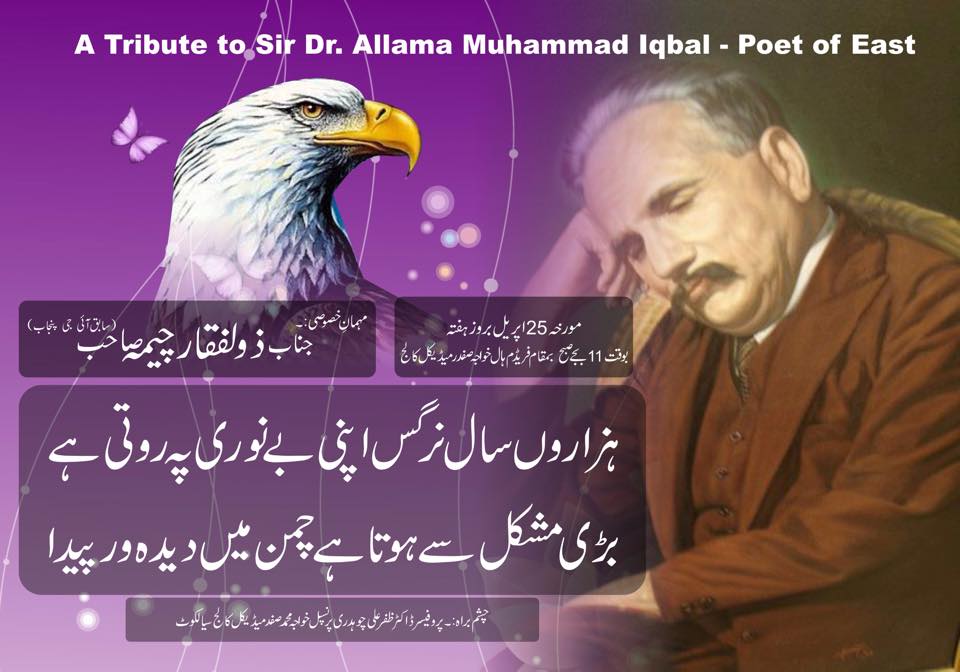
POET of EAST Allama Muhammad Iqbal


Sir Muhammad Iqbal, widely known as Allama Iqbal, was a poet, philosopher and politician, as well as an academic, barrister and scholar in British India who is widely regarded as having inspired the Pakistan Movement. He is called the "Spiritual Father of Pakistan." Wikipedia
Born: November 9, 1877, Sialkot
Died: April 21, 1938, Lahore

The ultimate aim of the ego is not to see something, but to be something.
Words, without power, is mere philosophy.
Nations are born in the hearts of poets, they prosper and die in the hands of politicians.


His one of the most important services as a hero was to aware the people through poetry. He wrote many books like: Shikwa, Jawab-e- Shikwa, Armaghan-e- Hijaz, Javed Nama, Bal-e- Jibrael etc.With these books he reminded the people about the goals of the life and ideas to form a better society. He wrote poetry in Urdu and Persian but he is thought to be the greatest Urdu poet of the 20th Century. His poetry serves as a reminder of the past glories of Islam.


Most important achievements of Iqbal were: -He raised voice for the cause of the Muslims of India when they were in British control and were the part of the British colony. -He put emphasis on promoting of education and other social problems were highlighted by him like unemployment and trade deficit. - He was the one who gave the idea for a separate homeland for the Muslims of India in 1930 and on the basis of his ideas Muslims of India got Independence. So I think he deserves to be a true hero who led the people.


Today dark clouds have appeared from the east again
Mount Sarban 
 has become covered with darkness again

As the sun's face became hidden under the clouds
Cool breeze also came riding on the steed of clouds

There are no thunder claps, silent are these clouds
Strange in its tranquillity is this tavern of dark clouds

It has brought everlasting joy's message for the garden
It has come to stitch pearls to the jacket of rose

The flowers which were fading by sun's heat freshened up
Those which were sleeping in the earth's bosom woke up

With the wind's force the cloud rose, advanced and flowed
Some dark clouds rose up, the clouds burst open into rain!

The camp of the mountains' trees is wonderful
Strollers in valleys should stay among its trees!
The End.....